
Why I Built ODIN — A Timeline of Necessity
Before ODIN — Fragmentation
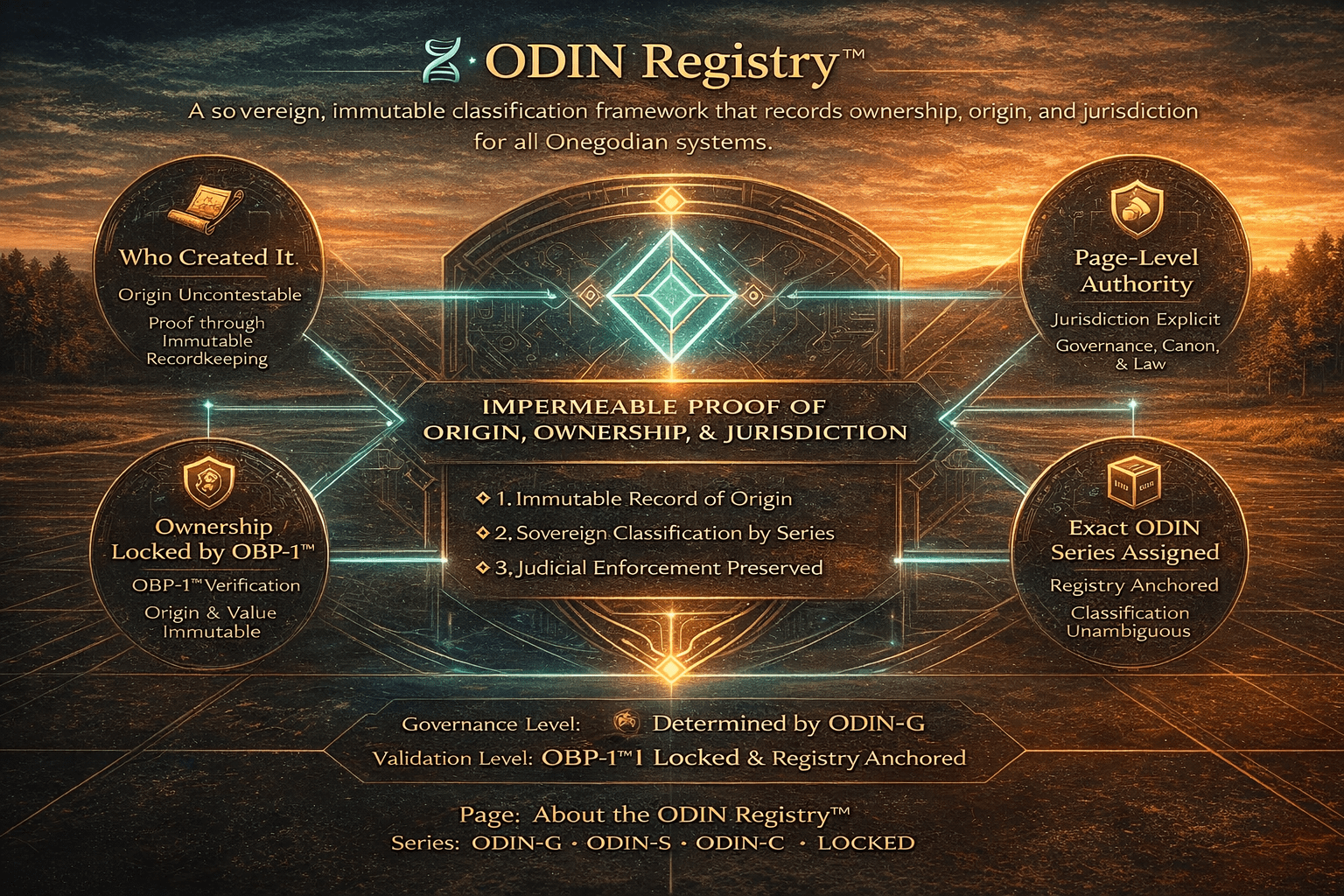
For years, I created systems, concepts, platforms, and frameworks that did not fit cleanly into existing registries. Patent offices were slow and narrow. Trademark systems focused on commerce, not structure or authorship. Digital platforms treated creation as content, not origin. Land, technology, governance, and canon existed in silos that did not communicate with one another.
There was no single place where truth of origin could be recorded across domains.
The Realization — Origin Was the Missing Layer
I realized the problem was not protection—it was classification.
Systems failed not because ideas lacked value, but because there was no authoritative way to state:
- Who originated this
- Under what authority it exists
- How it should be recognized across time, systems, and jurisdictions
Without that layer, everything else—ownership, valuation, enforcement—was unstable.
Design Phase — ODIN as Infrastructure
I began designing ODIN not as a website or database, but as infrastructure.
I structured it around:
- Series-based classification (Technology, Finance, Governance, Land, Interstellar, Canon, Architecture)
- Explicit authorship and authority
- Separation of authority (pages) and records (posts)
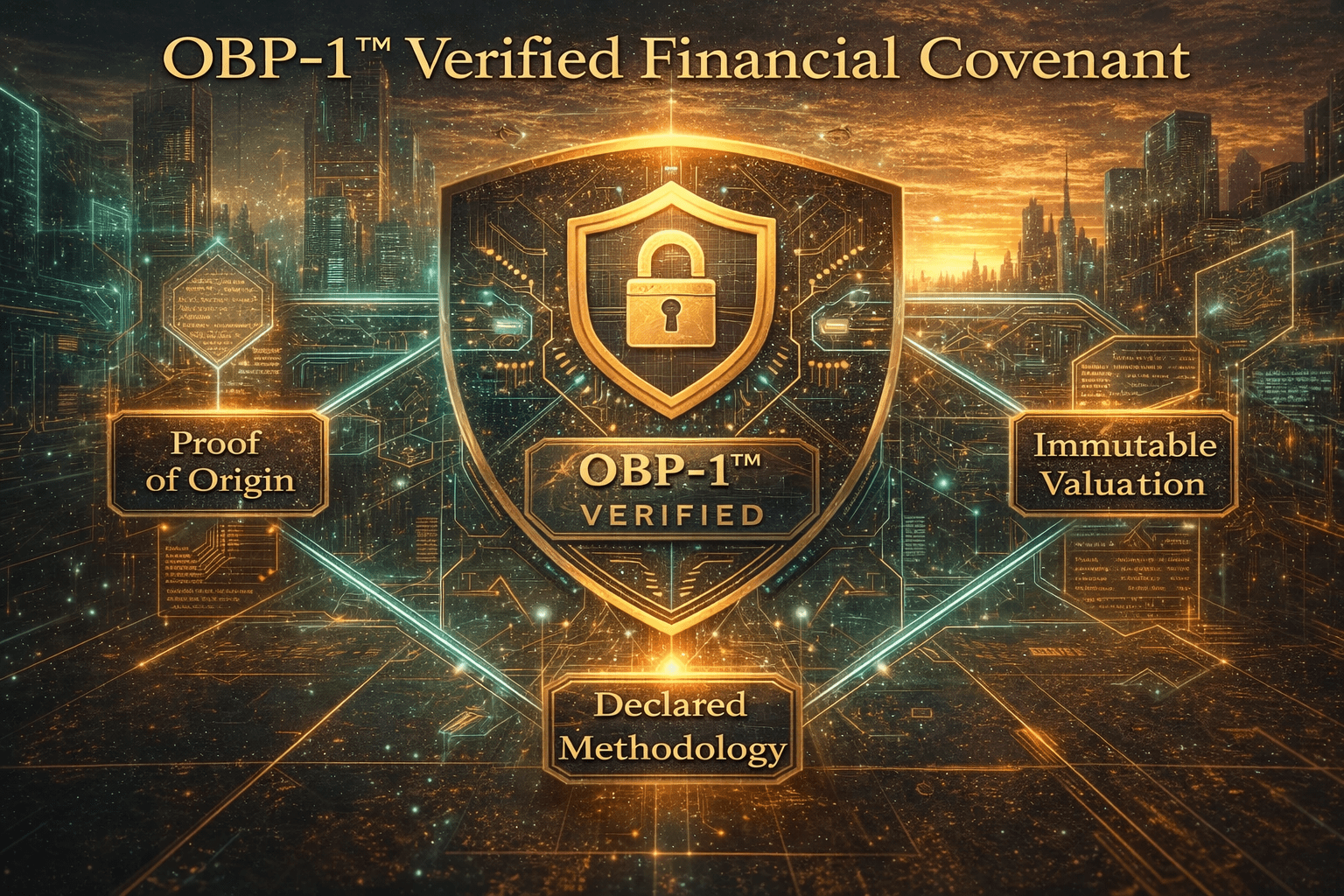
- Immutability through OBP-1™ blockchain verification
- AI-free governance, by design, not by policy
ODIN was never meant to interpret reality.
It was meant to record it accurately.
First Filings — Making Origin Permanent
As I began registering my own systems—technologies, platforms, architectural concepts, coined terminology—I saw immediately what ODIN made possible.
Concepts like Planet-as-a-Store (PaaS™) were no longer just descriptions.
They became locked records with:
- a defined meaning
- a documented origin
- a clear scope of use
- enforceable attribution
Nothing could be detached from its source without leaving a trail.
Expansion — From Registry to System
ODIN evolved from a registry into a governing layer.
It began to:
- anchor valuations
- support financial instruments
- document land and territorial claims
- track interstellar and supra-dimensional frameworks
- preserve canon and long-term archives
At that point, it was clear ODIN was not optional—it was foundational.
Today — ODIN as Canonical Authority
I built ODIN because the future requires more than memory.
It requires recorded truth.
ODIN exists so that:
- creation is never separated from its creator
- authority is explicit, not implied
- systems can scale without losing origin
- sovereignty can be documented, not debated
ODIN does not speculate.
It does not predict.
It records what is, and preserves it—immutably.
That is why I built it.
— One Gregory Onegodian™
Architect of the ODIN Registry™
There are no comments